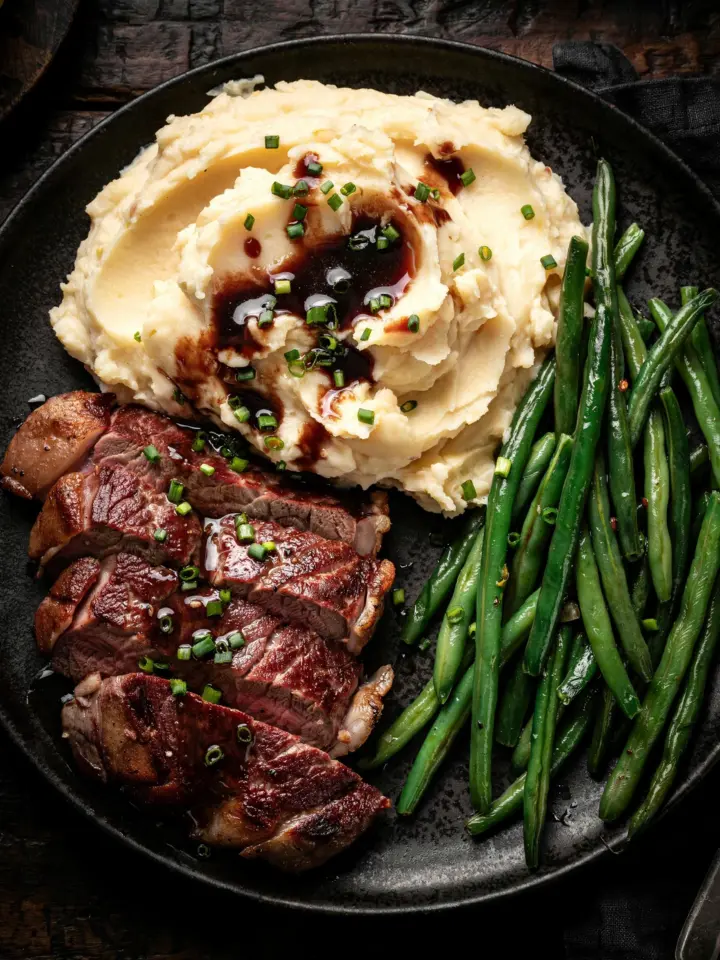
If you have tried making a ribeye and roasted garlic pan sauce at home only to end up with a dry steak or a bitter, greasy sauce, you are not alone. This dish looks simple on a Pinterest board, but a few small missteps can turn a fancy meal into a frustrating one. I have made every mistake myself over the years, and I learned that the difference between a good steak dinner and a great one comes down to avoiding a handful of common pitfalls. In this guide, I walk through the most frequent errors people make when cooking this comfort food recipe, and I show you exactly how to fix them so your next steak dinner is truly satisfying.
Mistake: Choosing a Lean or Thin Cut Instead of Ribeye for Pan Sauce
Pan sauces rely on the browned bits left in the pan, which are called fond. A lean steak like sirloin or a very thin cut simply does not produce enough fond for a rich sauce. Ribeye has generous marbling, and that fat renders during cooking, creating deep flavor and plenty of sticking bits on the pan bottom. A standard ribeye about 1 inch thick is perfect. If you buy a thinner cut, the steak cooks too fast and you have no time to build fond. I always pick a ribeye with visible flecks of fat throughout the meat, not just a fat cap on the edge. That interior fat melts and gives you the best base for your roasted garlic pan sauce.
Mistake: Using Raw Garlic Instead of Roasting It First
Raw garlic can turn acrid and bitter when it hits a hot pan, especially if you add it too early. Roasting garlic mellows its sharpness and brings out a sweet, nutty flavor that pairs perfectly with beef. Here is the easy method I use. Cut the top off a whole head of garlic, drizzle with a little olive oil, wrap in foil, and bake at 400°F until soft, about 40 minutes. Let it cool, then squeeze the cloves out. You can roast several heads at once and keep them in the fridge for a week. When you make your pan sauce, mash a few roasted cloves into the deglazing liquid. That step alone turns a standard gravy into something your guests will talk about.
Mistake: Deglazing the Pan at the Wrong Temperature
Many home cooks pour wine or broth into a pan that is too cold or too hot. If the pan is not hot enough, the fond dissolves slowly and you lose the sear flavor. If the pan is screaming hot, the liquid evaporates instantly and burns onto the surface. The right moment is right after you remove the steak and let the pan cool for about 20 seconds. The residual heat should be medium high, not max. Pour in a splash of dry white wine or low sodium beef broth and scrape with a wooden spoon. The liquid should sizzle gently and release the brown bits without smoking. If you see smoke, take the pan off the heat for a few seconds.
Mistake: Ignoring the Importance of Butter and Seasoning in the Sauce
A pan sauce that lacks fat and salt tastes thin and flat. After deglazing, I always swirl in a tablespoon of cold butter off the heat. This emulsifies the sauce and gives it a silky texture. Then I taste and add salt in small pinches until the flavor pops. Roasted garlic already adds sweetness, but a tiny squeeze of lemon juice or a splash of vinegar brightens everything. I have learned to never skip that final seasoning adjustment, because even the best fond and garlic will taste dull without proper salt and acid. Stir in some fresh thyme or rosemary at the end if you have it.
Mistake: Serving Without the Right Sides for an Easy Gourmet Steak Dinner
A ribeye with pan sauce deserves sides that complement without overpowering. Creamy mashed potatoes are the classic choice because they soak up the sauce beautifully. Avoid lumpy, watery mashed potatoes by boiling russet or Yukon gold until fork tender, then mashing with warm milk and butter, not cold. For green beans, blanch them in salted boiling water for 3 minutes, then shock in ice water. Just before serving, sauté them in a little butter and garlic for 1 minute. This keeps them bright
#ribeye #roastedgarlic #pansauce #comfortfood #steakdinner
Leave a Comment